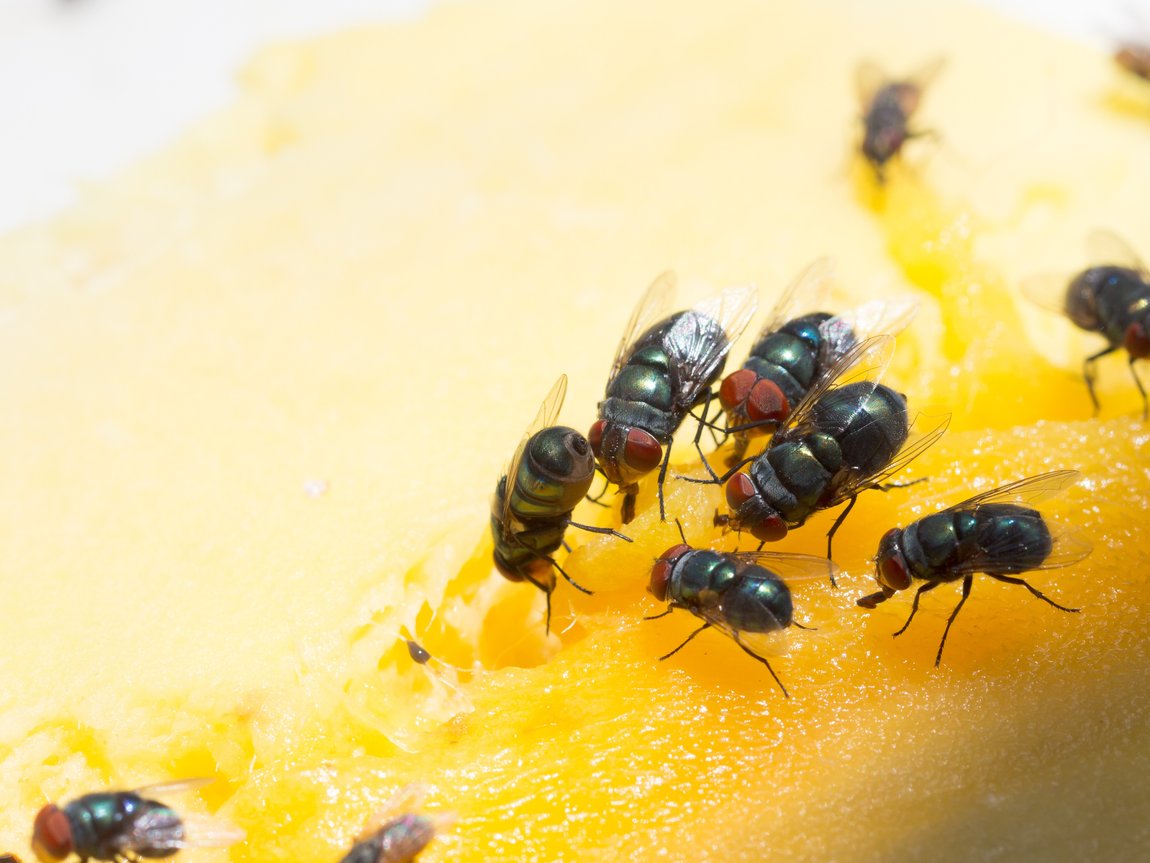
As soon as fruit ripens, they appear: fruit flies. These tiny insects, also known as vinegar flies or drosophila, multiply rapidly and are difficult to get rid of. However, with a few simple tricks, you can effectively eliminate them and prevent their return.
How Fruit Flies Multiply
The female lays up to 400 eggs at once, leading to rapid reproduction. Their favorite breeding ground is ripe fruit - which earned them the nickname fruit flies. But they also like to lay eggs in regular garbage or organic waste. After just nine days, a larva develops into a fly, and the cycle begins anew. However, they pose no danger. Unlike some other fly species, fruit flies don't transmit diseases.
How Can I Prevent Them?
To prevent fruit flies from entering your kitchen in the first place, there are a few things to keep in mind during summer. Prevention begins at the grocery store. If fruit flies are swarming over fruit in the supermarket - hands off! It's highly likely that the insects have already laid their eggs on it. These will then hatch in your home and cause an infestation. Once you've bought fruit, store it under a net or in the refrigerator. This keeps fruit flies away. Low temperatures also deter these insects.
Fruit that starts to rot should be disposed of immediately. The rotting smell attracts these small flies, as they primarily rely on their sense of smell. This tip also makes a big difference: Take out the trash more frequently in summer. Because fruit flies will go after that too. The same goes for food leftovers left uncovered in the kitchen. Wine, fruit juices, and vinegar also attract fruit flies. Therefore, always seal bottles tightly and thoroughly wash empty containers.
How to Make a Successful DIY Fly Trap
Once fruit flies are in your home, homemade traps can help. Simply fill a small bowl with vinegar, fruit juice, and a drop of dish soap. The smell of vinegar and fruit juice attracts the fruit flies. The dish soap breaks the surface tension of the liquids. The flies can then no longer stay afloat and drown in the mixture. It's best to place the trap next to the fruit bowl. Instead of vinegar, you can also use alcohol like wine or liqueur.
A jar of pickles also works perfectly as a trap. Once all the pickles are eaten, drill small holes in the lid. Then seal it well and place it next to the fruit. The sweet smell of the pickle juice attracts the flies. They can get in through the holes but can't find their way out again. The same principle works with a wine bottle. Just leave a small amount in it and place the bottle in the kitchen. The flies will swarm in and either drown in the wine or won't be able to find their way out of the bottle.
Secret Weapon: Carnivorous Plants
There are carnivorous plants that can help in the fight against fruit flies. These include the butterwort, sundew, or Venus flytrap. Butterwort and sundew have small glands on their leaves that secrete a sticky substance. The flies get stuck on this. The Venus flytrap, on the other hand, catches flies with a snap trap. When the fruit fly sits in the "mouth" of the plant, the trap closes and it's trapped. The Venus flytrap then releases a secretion to digest its prey. All three pest controllers need a bright location.
Herbs can also help against fruit flies. For example, the holy herb, also known as olive herb. When dried, its intense smell deters the flies. Simply hang the bouquet in the kitchen and the little creatures will say goodbye. The smell of basil or cloves also doesn't appeal to fruit flies. Either place a basil plant in front of the window or place a lemon studded with cloves next to the fruit bowl.
Live Traps for Animal Lovers
Those who want to get rid of fruit flies without killing them should use live traps. Simply put a bait like a banana peel in a glass. Then cover it with perforated cellophane wrap. Once you've caught a few creatures, take the glass outside and release the fruit flies. The same works with a small bag. Just place the bait inside and wait until some fruit flies go after it. Then seal the bag and take it outside.