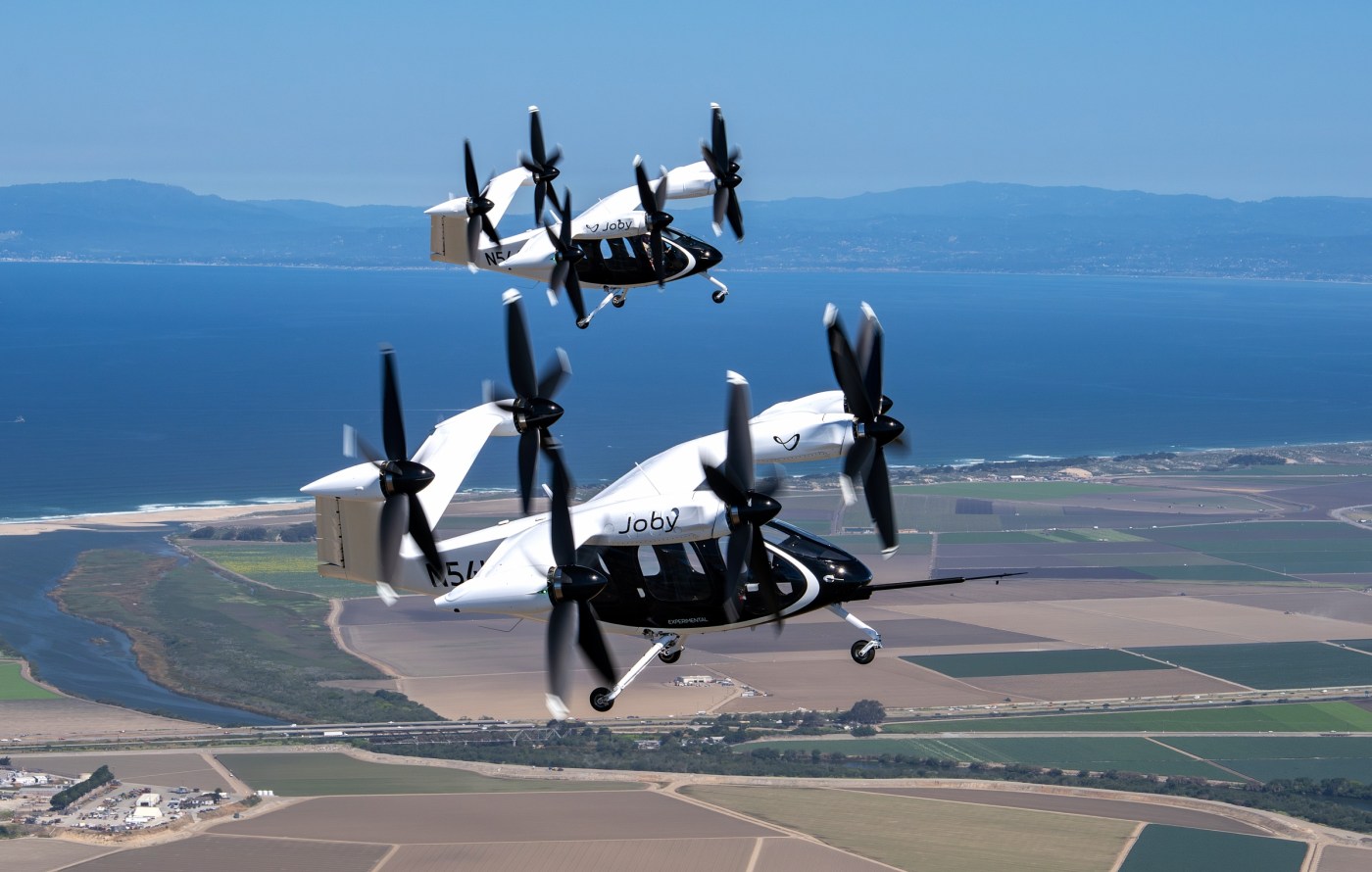
MARINA – Joby Aviation has announced it is exploring opportunities to develop a new aircraft class for defense application with L3Harris Technologies. The gas turbine hybrid vertical take-off and landing, or VTOL, aircraft is designed for low-altitude missions and can either be crewed or fully autonomous.
Joby, which is headquartered in Santa Cruz, has been doing business in Marina for about the past seven years developing an all-electric, vertical take-off and landing air taxi designed to carry a pilot and up to four passengers at speeds up to 200 mph, offering high-speed mobility with a fraction of the noise produced by helicopters and zero operating emissions.
“We have worked closely with the Department of Defense over the past decade to give them a front row seat to the development of our dual-purpose technologies, and we’re now ready to demonstrate and deploy it,” said JoeBen Bevirt, founder and CEO of Joby Aviation, in a press release. “Our country depends on companies like ours moving at pace, and we have the team, the technology and the platform to do just that.”
Joby Aviation has delivered two of its aircraft to Edwards Air Force Base as part of Joby’s up to $131 million Agility Prime contract with the Air Force.
L3Harris Technologies says it is the “Trusted Disruptor” in the defense industry, and adds that with customers’ mission-critical needs always in mind, its employees deliver end-to-end technology solutions connecting the space, air, land, sea and cyber domains in the interest of national security.
“The next-generation of vertical lift technology enables long-range, crewed-uncrewed teaming for a range of missions,” said Jon Rambeau, president, Integrated Mission Systems, L3Harris, in the release. “We share a vision with Joby to deliver urgently required innovation by missionizing VTOL aircraft for defense needs.”
Joby’s collaboration with L3Harris leverages Joby’s existing commercial aircraft development program and leading manufacturing capabilities, with L3Harris’ expertise on platform missionization including sensors, effectors, communication and collaborative autonomy. Flight testing is expected to start this fall with the companies planning to perform operational demonstrations during government exercises in 2026.
Joby Aviation expanded its site at the Marina Municipal Airport in Marina last month with the addition of its 220,000-square-foot manufacturing facility, which more than doubles its manufacturing footprint at that location and supports the scale-up of commercial operations while bringing Joby’s total presence at the airport to about 435,500 square feet. The new facility also houses an expanded pilot training and flight simulation center as well as aircraft maintenance facilities.
Joby says it is actively developing a gas turbine hybrid powertrain for its current S4 aircraft platform and has demonstrated aircraft-level autonomy following its acquisition of the autonomy division of Xwing in June 2024. It has previously demonstrated under government contract that its platform can be hybridized to deliver longer-ranges, showcasing an industry-first 561-mile hydrogen-electric hybrid flight above Marina in June 2024.
Joby Aviation also expanded its flight test program last month with the addition of another aircraft from its pilot manufacturing line in Marina to its fleet of six aircraft. That fleet includes two aircraft stationed at Edwards Air Force Base, where they are completing testing in conjunction with the company’s defense partners.
In May, Bevirt said that with six aircraft in the Joby test fleet, flying multiple aircraft at a time will play an important role in accelerating its certification testing and supporting plans to carry passengers for the first time next year.