During the run-up to the July 2024 election, economic journalists were invited along for an informal chat with the future Chancellor Rachel Reeves.
She argued that growth would be a priority for a Labour government and a key part of the programme would be to get Britain building again.
The UK has been poor at delivering infrastructure and in the past housing targets have been hard to meet.
Tearing up planning rules was always going to be difficult because of Britain’s long history of Nimbyism.
More than a year into power, and with reforms to planning rules falling into place, brisk progress was to be expected.
But the S&P report from UK construction managers for July doesn’t offer optimism.
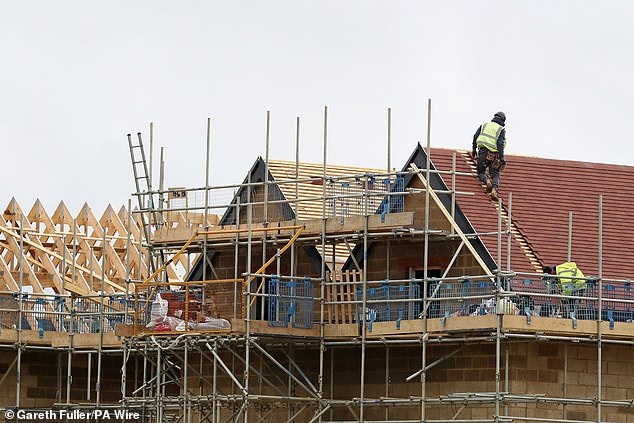
It shows the steepest fall in activity since May 2020. The biggest drop came from residential, putting the Government’s target of building 1.5m homes in this Parliament in jeopardy.
Construction firms cited site delays, fewer new orders and weak consumer confidence as factors.
We shouldn’t be surprised. Interest rates have proved sticky despite four decreases since Labour took office.
The Bank of England is expected to offer a quarter of a percentage point reduction to 4 per cent today.
Bad tax policy has played a part. Employment costs are up because of the employers’ National Insurance Contributions rise.
And the abolition of tax relief on stamp duty at the bottom rung of the ladder makes the aspiration to be part of a property-owning democracy harder.
To add to the woes of those seeking a construction revolution, former Labour leader Jeremy Corbyn has joined the Nimbys – he objects to Deputy Prime Minister Angela Rayner giving permission to four councils to build over allotments.
That’s bad for working people, for homegrown produce and the nation’s health. Another unforced error.
America first
The fascinating aspect of commodity trader and miner Glencore’s decision to stick with a London listing is its reasoning. Moving to New York, the favoured option, involved ‘significant costs’.
Its chief executive Gary Nagle might also have pointed out that, with some rare exceptions such as smart chip maker Arm and building group CRH, American investors have not greeted the British arrivals with hosannas.
Nagle also rued the fact that there was no certainty that £36billion Glencore would be granted entry to the S&P 500 because of coolness to foreigners.
The loss of Glencore would have been serious for London, with its strong history of hosting natural resources companies.
BHP retreated to Sydney and if activists had their way Rio Tinto might have done the same. Glencore would have been a less significant departure than AstraZeneca or Shell, both of which have flirted with the idea.
Not all is green on the other side of the Atlantic, where AstraZeneca is vowing to invest £37billion.
Overnight, the US health secretary Robert F Kennedy Jr halted production of mRNA vaccines on a whim.
Indeed, Astra’s first-to-market Covid jab was slow to be approved in the US, where ‘America first’ vaccines from Pfizer and Moderna were preferred.
It is not just US President Donald Trump and the Republicans who willingly bash overseas investors.
President Barack Obama humiliated oil giant BP over the Deepwater Horizon explosion in the Gulf of Mexico in 2010 – leading to tens of billions of pounds of losses for UK investors.
Glencore’s vote of confidence in Britain might be seen by cynics as a distraction from a disappointing performance in the first half. The miner is responding with a pledge to cut $1billion in costs.
Never underestimate the odds of it roaring back on robust trading operations.
Oven ready
It was predictable that supermarket Morrisons would have to jettison assets to pay down the debt it acquired when it fell under the private ownership of Clayton, Dubilier & Rice in 2023.
That is unlikely to be enough in a highly competitive grocery market.
Prices are generally higher than at rivals and it may require a fresh look at costly specialist counters and whether the vertical model, from farm to customer, is sustainable.
That would be a pity.